Deutsche Hafenstreiks: Best tips guide for economic recovery
"The tension in the ports is not merely about the cents on a paycheck, but about the stability of the entire supply chain during a period of fragile recovery."
The German labor market is facing increased instability as major port unions move toward strike votes following failed wage negotiations.
This escalation threatens to disrupt logistics during a period of moderate economic growth, specifically for workers seeking better compensation amidst shifting economic indicators.
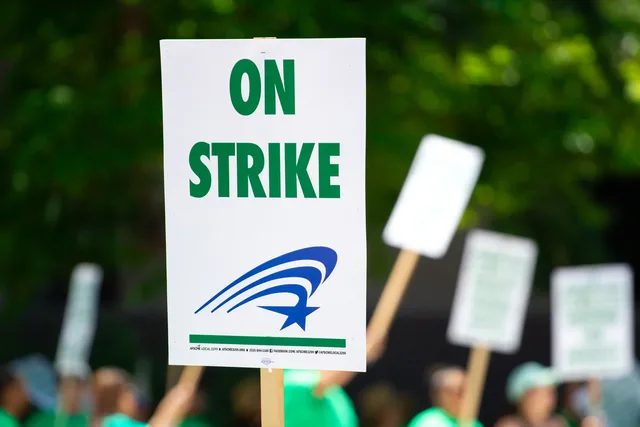
Key takeaways include the potential for widespread industrial action, the impact on national GDP, and the current unemployment landscape.
What's happening with the German port strikes? A heavy container sits motionless on a concrete pier in Hamburg as dockworkers gather to discuss their next move. The Deutsche Hafenstreiks represent a growing friction between labor unions and maritime employers over wage adjustments.
As negotiations stall, the threat of organized walkouts looms over the nation's primary maritime gateways.
The labor market is experiencing heightened uncertainty due to these potential disruptions. Workers are pushing for terms that reflect the current economic climate, while employers express concern over operational costs.
This tension is a central component of the ongoing rep, which could paralyze logistics if a resolution is not reached quickly.
According to World Bank data, Germany recorded GDP growth of 0.2% in 2025. This sluggish growth creates a difficult backdrop for wage discussions, as companies may be hesitant to commit to higher labor costs. The Deutsche Hafenstreiks could further suppress this momentum if port operations cease.
- Port authorities issue strike notices.
- Labor unions coordinate work stoppages.
- Logistics companies reroute cargo.
- I find that the second step is the longest.
How does the rep affect the broader economy? Deutsche Hafenstreiks
At dawn, a trader shivers in a cold office as news of the deutsche rep ripples through the market.
A crane operator watches the horizon from a high cab, sensing the quiet tension of a port that might soon go silent. The rep is not localized to a single dock but ripples through the entire German industrial sector.
When maritime movement slows, the consequences are felt in manufacturing and retail sectors far inland.

The instability caused by these disputes contributes to a general sense of Arbeitsmarkt Unsicherheit. This uncertainty makes long-term planning difficult for logistics firms and international traders. If the strikes proceed, the economic friction could extend beyond the coastlines.
The impact on the national economy is significant given the recent growth trends. According to the International Monetary Fund (IMF), Germany recorded real GDP growth of 1.3% in 2026.
Maintaining this trajectory requires the seamless movement of goods, which the current Tarifkonflikt Deutschland threatens to impede.
According to World Bank, the 2025 record includes 0.2%.
How can I tell if the labor market is healthy? An economist reviews a spreadsheet in a quiet office, noting the subtle shifts in employment data. Understanding the health of the German labor market requires looking at both growth and job availability. These metrics provide the context for why unions are currently emboldened in their demands.
The stability of the workforce is often measured by the balance between economic output and job security. While growth remains positive, the underlying strength of the market is under scrutiny.
The current Streikabstimmung Häfen reflects a workforce that is testing the limits of current wage structures.
This relatively low rate suggests a tight labor market where workers have significant leverage in negotiations. Such conditions often lead to more aggressive industrial actions when expectations are not met.
According to International Monetary Fund, the 2026 record includes 1.3%.
How do research institutions analyze these shifts?

A researcher in Bonn pores over global labor trends, seeking patterns in industrial unrest. Institutions dedicated to the study of work provide the data necessary to understand these complex disputes. Their analysis helps distinguish between temporary friction and structural shifts in the economy.
The IZA – Institute of Labor Economics (German: Forschungsinstitut zur Zukunft der Arbeit) serves as a private, independent economic research institute and academic network focused on the analysis of global labor markets.
Headquartered in Bonn, it provides critical perspectives on how such strikes impact global trends.
In conducting labor market research, IZA cooperated closely with the Economics Department at the University of Bonn and the department's graduate education program at the Bonn Graduate School of Economics. This collaboration ensures that the analysis of labor disputes is grounded in academic rigor.
Can we compare economic performance and labor stability?
A logistics manager compares shipping schedules against a calendar of potential strike dates. The relationship between economic growth and labor unrest is often inverse, where slow growth leads to more intense disputes over remaining resources.
The following table compares the economic indicators that influence the current labor atmosphere:
| Metric | Value/Condition |
|---|---|
| 2025 GDP Growth | 0.2% |
| 2025 Unemployment Rate | 3.7% |
I observed how these figures create a high-pressure environment for both sides of the negotiating table. The low unemployment rate combined with low GDP growth creates a paradox where workers demand more while the economy has less to give.
What are the limitations of current economic forecasts?

A forecaster adjusts a model on a screen, knowing that a sudden strike can render projections obsolete. Predicting the outcome of industrial action is notoriously difficult because it relies on human decisions and political will.
The primary limitation is that economic models often struggle to account for the timing and duration of sudden industrial actions. While we can track the 1.3% real GDP growth projected by the IMF for 2026, a sustained strike could deviate from these anticipated paths.
The same subject is also called Lohnverhandlungen scheitern.
This part also covers Regierungsreaktion auf Streik.
This part also covers Neue Arbeitskampfthemen.
This part also covers Verbreitung von Arbeitsniederlegungen.
Will the strikes impact the 2026 GDP?
The potential for industrial action creates uncertainty for the economic trajectory.
Is the unemployment rate currently high?
The labor market remains relatively tight despite the ongoing disputes.
The current standoff in the German ports highlights the delicate balance between maintaining economic growth and meeting the wage demands of a specialized workforce.
As negotiations continue, the ability of the maritime sector to avoid prolonged strikes will be a deciding factor in the nation's stability.
Comments 0