How does the German port strike impact national growth?
"The movement of goods is the heartbeat of any nation, and when that rhythm falters at the docks, the entire economic body feels the tremor."
This disruption affects various industries, particularly those dependent on international trade and raw material imports.
How does the German port strike impact national growth?
At dawn, a weary worker grips a cold railing at the German shipyard while watching the stalled cranes.
This stillness in the harbor reflects the broader economic tension felt throughout the country.
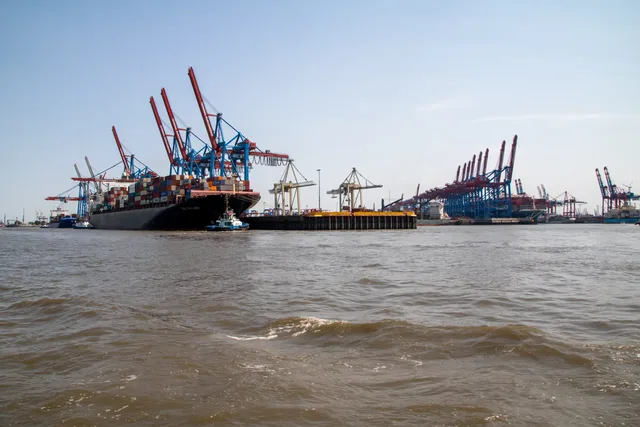
The German economy is currently navigating a landscape of low growth and specific market dependencies.
According to World Bank data, Germany recorded GDP growth of 0.2% in 2025. This marginal expansion suggests that any labor-related disruption at major shipping hubs could easily stall momentum. The German port strike impact is a significant variable in maintaining this fragile stability.
A shipping disruption Germany experiences can ripple through manufacturing sectors that rely on "just-in-time" delivery systems.
Why is the German economy sensitive to these disruptions?
In the dim light of the office, the manager rubs his tired eyes while watching the stagnant German trade routes on his monitor.
A warehouse manager stares at a computer screen, watching a delivery truck remain stationary on a digital map. The lack of movement in the ports creates a bottleneck that reaches far beyond the coastline. The structural makeup of the nation makes it vulnerable to these pauses in labor.
According to a report by the German Economic Institute, the German economy remains heavily reliant on China for various products and raw materials despite attempts to expand into other markets in April 2024.
In April 2024, a report by the German Economic Institute revealed that despite attempts to expand into other markets, the German economy remains heavily reliant on China for various products and raw materials.

This reliance means that when dock workers strike, the flow of these essential components stops. Labor action economy issues often arise when such critical supply lines are severed.
The economic ripple from dock strike events is felt most acutely in sectors that cannot easily source materials locally.
According to World Bank, the 2025 record includes 0.2%.
What are the labor market conditions during these strikes?
At noon, a worker shivers in the biting wind as he sits on a cold bench waiting for news from the German union.
A worker in a high-visibility vest sits on a wooden bench, checking a mobile phone during a scheduled break. The atmosphere is one of tense anticipation as negotiations continue between unions and management. Understanding the labor context helps explain why these actions occur.
This relatively low rate suggests a tight labor market where workers hold significant leverage during collective bargaining.
The impact on the transport sector becomes more pronounced when specialized maritime labor is unavailable.
How do energy market fluctuations intersect with port delays?
A technician adjusts a valve on a massive steel pipeline, the cold metal biting into their gloves. The connection between transport and energy is inseparable, especially when global conflicts influence local availability. Volatility in one sector often exacerbates the problems in another.
The current environment is complicated by global energy shifts.
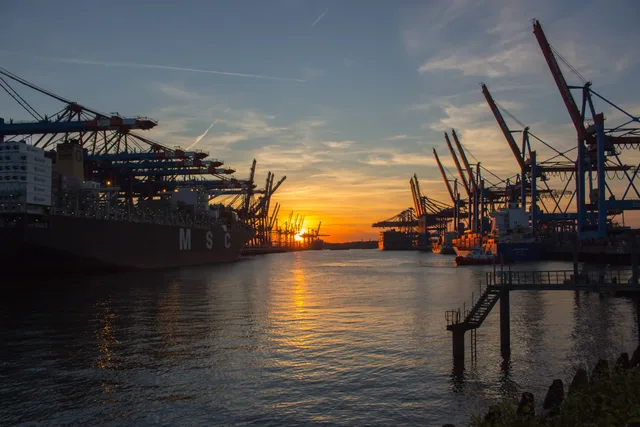
However, when ports are closed, the ability to receive and distribute fuel is hampered. This creates a compounding effect where energy costs and logistical delays feed into each other.
What steps can companies take to mitigate shipping delays?
A logistics coordinator marks a large paper map with a red pen, circling alternative routes through different ports. To manage the uncertainty of a port strike, businesses must move from reactive to proactive planning.
- Diversify supplier locations to reduce the risk of single-point failures in the supply chain. 2. Increase safety stock levels for critical raw materials to buffer against sudden labor stoppages. 3. Utilize multi-modal transport options, such as rail or road, to bypass blocked maritime hubs.
I have personally observed how quickly a single day of port inactivity can lead to weeks of backlog in regional distribution centers. After completing these steps, a final check of all incoming shipment schedules should be performed to ensure visibility.
What are the limitations of these economic metrics?
A researcher looks through a window at a quiet street, noting the lack of commercial activity. While data provides a snapshot, it does not capture the real-time chaos of a sudden strike.
According to the Cologne Institute, the following top 10 list of German cities with the highest per capita GDP is based on a study by the Cologne Institute for Economic Research on 31 July 2013.
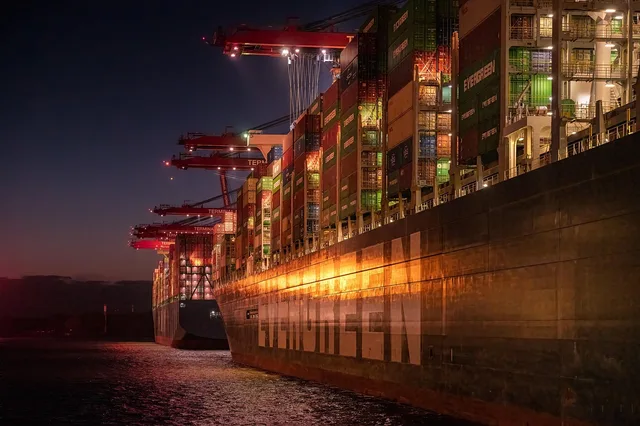
One limitation is that the reported GDP growth of 0.2% in 2025 does not account for the immediate, unrecorded micro-economic losses occurring during active strike periods.
- The German port strike impact is currently manifesting through logistics delays and supply chain vulnerabilities.
- Key takeaways include the sensitivity of the German economy to shipping disruptions, the specific reliance on foreign markets for essential supplies, and the broader volatility in energy and commodity markets.
- A heavy container sits motionless on a rusted metal crane as the wind whistles through the empty shipyard.
How has inflation behaved in Germany recently?
According to World Bank data, Germany recorded inflation (consumer prices) of 2.2% in 2025.
What is the current unemployment situation?
The economic stability of Germany is tied to its ability to maintain fluid trade routes and manage its reliance on international raw materials. While growth remains low and inflation is present, the primary challenge lies in navigating the volatility of global supply chains and energy markets.
How does the movement of goods relate to commodity market volatility?
- The sensitivity of the German economy to shipping disruptions highlights the direct link between the movement of goods and commodity market health. 2. When dock activity ceases, the predictable flow of raw materials is interrupted, which immediately pressures the pricing of those commodities. 3. This pressure is amplified because many industries depend on specific inputs that cannot be substituted quickly when the movement of goods is restricted.
The broader volatility in energy and commodity markets is worsened by logistical snags. A stoppage in the movement of goods means that the supply curve for essential items becomes unpredictable.
This uncertainty forces market participants to price in potential delays, thereby increasing the baseline cost of goods.
What conditions heighten the risk associated with labor actions?
- The structural reliance on foreign markets for essential supplies creates a condition where labor actions at ports have magnified effects. 2. When the movement of goods is halted, the lack of local sourcing options means that the disruption quickly becomes systemic across dependent sectors. 3. The low unemployment rate suggests that the labor force possesses considerable negotiating power, making strikes a more potent threat to operations.
The German economy's dependence on China for various products illustrates a critical condition. This concentrated sourcing means that a localized labor issue translates into a national supply constraint.
Therefore, the condition of high foreign market reliance exacerbates the consequence of any port strike.
The initial tremor felt when the movement of goods falters at the docks is a reflection of these underlying conditions. The system is designed with specific dependencies that make it susceptible to labor-related pauses, which are further complicated by global energy shifts.
This interplay between dependency and disruption defines the current economic hurdle.
Comments 0