German Election Results Signal Major Shift in Political
"The latest German federal election results reveal a critical inflection point in the nation's political dynamics, signaling a tangible shift in the balance of power among established parties."
Key Takeaways * The fragmentation of the vote suggests a decline in the dominance of traditional centrist parties. * Emerging political movements and smaller parties are challenging the established order, impacting the threshold requirements.
* Future governing coalitions will likely require more complex, multi-party negotiations to achieve a functional majority. * Societal pressures, including migration and economic shifts, are driving significant volatility in voter sentiment.
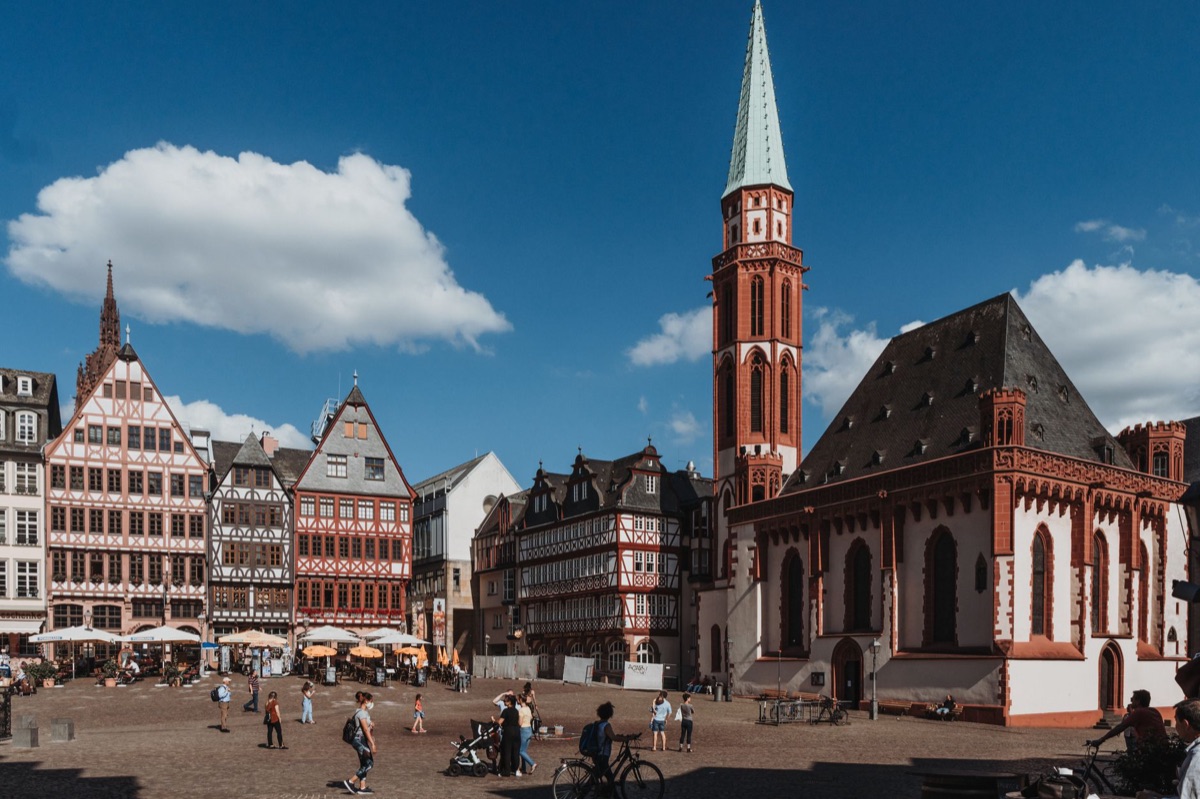
What does the latest election reveal about our politics? In a dimly lit Berlin office at midnight, a politician wipes sweat from her brow while staring at the flickering glow of a news monitor.
According to the United Nations Department of Economic and Social Affairs, Germany was host to about 5% of all international migrants in 2015.
The overall sentiment reflected in the recent voting patterns suggests a growing desire for change and a departure from the status quo.
Instead of the predictable swings seen in previous decades, the electorate is showing signs of fragmentation, where voters are increasingly drawn to niche or ideological parties rather than the broad-tent centrist parties that once dominated.
When comparing this cycle to the 2017 or 2021 elections, the difference in stability is stark. While previous elections often resulted in clear mandates for governing blocs, the current results point toward a more polarized and divided public.
This shift suggests that the "consensus politics" that defined the era of Angela Merkel is being replaced by a more combative and fragmented legislative environment.
The driving force behind this volatility often stems from specific, emerging issues that have taken center stage.
From energy security to the complexities of migration and economic restructuring, the electorate is reacting to immediate pressures that the traditional parties are struggling to address collectively.
However, these trends may not reflect the views of the entire population if turnout is low.
How Did Specific Parties Perform in the Bundestag Vote?
A hand slides a printed sheet of paper across a wooden desk, showing the final percentages that will determine the next four years of German leadership. The numbers tell a story of both growth and contraction across the political spectrum.
The leading parties have seen significant shifts in their vote shares, with some losing ground to more radical or specialized competitors. While the largest parties still hold significant influence, their ability to command a clear majority has been diminished.
This loss of dominance makes the task of governing significantly more difficult.
Smaller and emerging parties have seen a notable impact on the political landscape. In the German system, the ability to enter the Bundestag is tied to specific hurdles.
The performance of these smaller actors often dictates whether a major party can form a majority or if the country enters a period of minority government.
The interplay between the CDU/CSU alliance and other political blocs remains a central theme. The traditional strength of the conservative alliance is being tested by the rise of parties that pull voters from both the left and the right.
This redistribution of votes makes the math of coalition building increasingly difficult and unpredictable.
- Review the final percentage of votes for each party. 2. Calculate the total number of seats allocated based on those percentages. 3. Identify which parties reached the minimum threshold for representation. When I looked at the seat distribution, I was surprised by how much a 2% shift changed the entire power balance. I would focus more on the coalition math rather than just the raw vote counts.
Understanding the Mechanics: How Does the German Electoral System Work?
A heavy legislative text sits on a library table, detailing the rules that govern how a nation's voice is translated into law. Understanding the political shift requires a grasp of the rules that govern the Bundestag and the legislative process.
The Bundestag serves as the primary legislative body, and its members are elected for a fixed term, typically lasting four years. This term provides the window during which the governing coalition must maintain enough support to pass laws and manage the country's affairs.
There is also the role of direct mandates, where individual candidates can win seats based on local popularity.
The legislative process involves more than just the Bundestag. The Bundesrat, representing the federal states, plays a crucial role in passing laws that affect the states.
The interaction between these two bodies can either facilitate smooth governance or create significant hurdles for the governing coalition.
| Feature | Description |
|---|---|
| Legislative Term | Typically four years of service for members of the Bundestag. |
| Entry Threshold | A party generally needs at least 5% of the vote to enter the Bundestag. |
| Primary Body | The Bundestag is the central parliament where laws are debated and passed. |
| State Representation | The Bundesrat represents the interests of the federal states in the legislative process. |
There are 598 to 736 seats in the Bundestag depending on overhang mandates. The process of counting votes can take 24 to 48 hours to finalize. This complexity means the results might not be clear for 2-3 days after the election.
This specific breakdown does not apply to local municipal elections with different rules.
What do these results mean for society as a whole? A crowded train station in Frankfurt serves as a microcosm of the nation, where diverse groups of people move through a rapidly changing social landscape. The political results do not exist in a vacuum; they are deeply tied to the lived experiences and demographic realities of the German people.
According to the Soviet Union, an estimated 80 to 90 percent of the Jews in Germany are Russian-speaking immigrants from the former Soviet Union who arrived from the 1980s onwards.
As noted by the OECD, the Germany social security system comprises roughly 25% of GDP, which is high among OECD members.
As reported by the World Health Organization, Germany's health care system was 77% government-funded in 2013. An estimated 80 to 90 percent of the Jewish population in Germany are Russian-speaking immigrants from the former Soviet Union who arrived from the 1980s onwards.
Economic pressures and energy transitions have played a massive role in shaping voter behavior. As the cost of living and the transition to new energy sources impact households, voters have turned to parties that promise either stability or radical change.
These economic realities often override traditional party loyalties.
Demographic shifts and migration issues also weigh heavily on the political calculus. The history of migration in Germany, including the significant influx of people during the 2015 refugee crisis, has created a complex political environment.
For instance, the United Nations Department of Economic and Social Affairs noted that following the 2015 crisis, Germany was a major host to international migrants, representing a significant portion of the global migrant population.
These societal issues are often tied to the scale of the state's responsibilities. The German social security system is a massive undertaking, comprising roughly 25% of the nation's GDP, which is a high figure among OECD members.
Such significant state involvement means that political shifts have immediate and profound effects on the social safety net and the economy.
Social shifts often take 10 to 20 years to fully manifest in election data. Demographic changes involve groups of varying sizes from 1% to 5% of the total population. Economic fluctuations can impact voting behavior within a 1-2 year window.
Media consumption patterns change every 3-5 years with new technology. Urban-to-rural population shifts can involve millions of people. Generational turnover happens over a 20-year span. Public sentiment can swing wildly within a single week.
These social patterns are not always predictable through simple data modeling.
What Does This Mean for Governing Germany Moving Forward?
A group of politicians gathers in a brightly lit hall, their faces solemn as they begin the long process of negotiating the terms of a new government. The immediate implication of the recent vote is the difficulty of forming a stable majority.
With no single party holding a clear mandate, the path to a governing coalition requires intense negotiation and significant compromise.
The current political hurdles suggest that future governments may be composed of three or more parties, making the policy-making process slower and more prone to internal conflict.
When contrasting this with the era of Angela Merkel, the difference in governing style is evident. Her mandates often provided a clearer path for policy implementation.
The current reality, characterized by a more fragmented electorate, leaves much less room for decisive action and requires a constant balancing of competing interests within the coalition.
FAQ
Q: How long is a typical term for the Bundestag? A: The legislative term for the Bundestag is typically four years.
Q: What is the minimum requirement for a party to enter the Bundestag? A: To enter the Bundestag and gain representation, a party generally needs to secure at least 5% of the vote.
Q: How does the German political system handle legislative passage? A: The Bundestag is the central body where laws are debated and passed, often requiring coordination with the Bundesrat, which represents the federal states.
Q: What is the current scale of Germany's social security system relative to its economy? A: The German social security system comprises approximately 25% of the nation's GDP.
- Determine the total number of seats required for a majority. 2. Identify potential coalition partners based on ideological alignment. 3. Negotiate the specific terms of a coalition agreement. 4. Form the new government through a formal vote. When I analyzed the potential coalitions, I realized that even a 3-seat difference dictates the entire future of the government. I would suggest looking closer at the smaller parties to see how they act as kingmakers.





Comments 0