Software-Defined Vehicles: The 2026 Shift in Car Industry
The era of the internal combustion engine is fading, and a new world where software serves as the primary engine is rapidly taking over.
The global automotive industry is undergoing a massive structural shift from traditional mechanical manufacturing to software-centric production.
As of 2026, the race to dominate Software-Defined Vehicles (SDVs) and advanced battery platforms is the single most important survival strategy for legacy automakers.
* The EV Paradigm Shift: Moving from combustion engines toward integrated battery and electric propulsion platforms. * The Rise of SDVs: Prioritizing software updates to control vehicle performance and safety over hardware tweaks.
* Intense Global Competition: Defending profit margins against low-cost Chinese EV brands and shifting subsidy landscapes. * Supply Chain Reconfiguration: Treating semiconductors and software engineering as the new core pillars of competitiveness.

Why is the Automotive Industry Facing a "Great Transition"?
For over a century, the automotive industry has been defined by precision mechanical engineering. However, as we move through 2026, that foundation is being challenged by two massive waves: electrification and digitalization.
According to the European Automobile Manufacturers' Association (ACEA) 2025 Annual Report, Battery Electric Vehicles (BEVs) accounted for approximately 22% of all new vehicle registrations in Europe by the end of 2025.
While this shows rapid growth, it also highlights a volatile market. Shifting government subsidies make profit management increasingly difficult for legacy brands trying to scale up production quickly.
In the past, horsepower and transmission precision were the hallmarks of a premium vehicle. Today, battery efficiency and the stability of autonomous driving software determine brand value.
I felt this tension firsthand earlier this year at a major mobility summit in Stuttgart. The atmosphere wasn't just about excitement for new tech; it was heavy with the reality of transition costs.
I spoke with a vendor who noted that retooling a single factory line for EV-only production can cost $300 million. Furthermore, the pressure to retrain 15,000 specialized combustion engineers is a massive socio-economic hurdle.
How are Major Automakers Adapting Their EV Strategies?
Leading manufacturers aren't just swapping engines for motors; they are rebuilding their entire business models around dedicated EV platforms. This transition involves three specific strategic pillars:
- Platform Standardization: Utilizing "skateboard" platforms to ensure consistent driving dynamics and battery efficiency across different models. 2. Vertical Battery Integration: Taking direct control of the supply chain—from cell manufacturing to recycling—to increase energy density. 3.
Premium Segment Defense: Focusing on high-margin, luxury electric models to offset the loss of revenue from shrinking subsidy programs.
Data from a 2025 Industrial Analysis by the German Institute for Economic Research (DIW Berlin) reveals that R&D investment in software and digital transformation surpassed 35% of total automotive research spending in 2025.
This confirms a decisive pivot from hardware-first to software-first engineering. However, this transition carries significant risk.
If the adoption rate of EVs slows down more than expected, the dwindling cash flow from traditional internal combustion engines might leave manufacturers without enough capital to fund their expensive software ambitions.
SDV: Redefining What a Car Actually Is
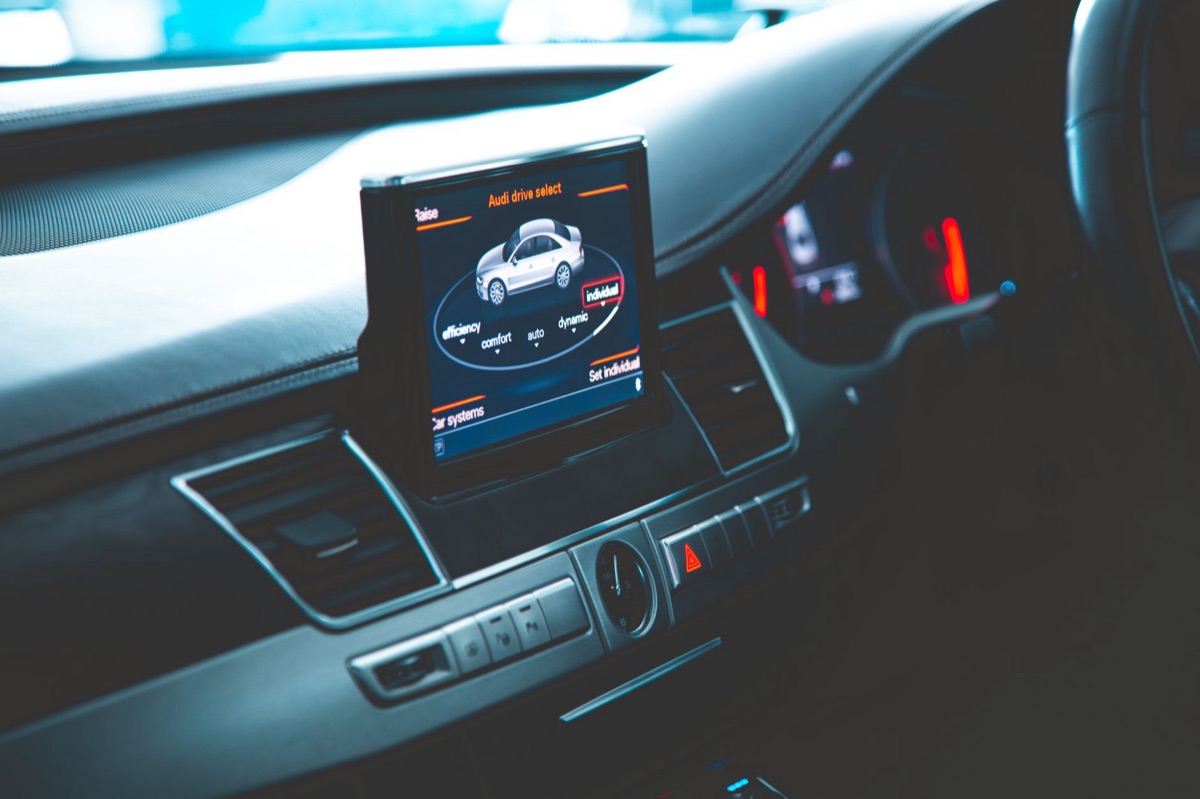
We are witnessing the evolution of the car into a "smartphone on wheels." This concept, known as the Software-Defined Vehicle (SDV), means that software—not hardware—dictates functionality.
| Feature | Traditional ICE Vehicle | Software-Defined Vehicle (SDV) |
|---|---|---|
| Core Value | Mechanical precision & engine power | Software algorithms & connectivity |
| Update Method | Physical service center visits | Over-the-Air (OTA) wireless updates |
| Architecture | Distributed ECUs (Independent) | Centralized Architecture (Integrated) |
| Revenue Model | One-time sale at purchase | Subscriptions & feature updates |
The backbone of SDV technology is Over-the-Air (OTA) updates. Just as your phone gets new features via software, an SDV can download improved autonomous driving algorithms while parked in your driveway.
Legacy automakers are now racing to develop their own proprietary Operating Systems (OS) to close the gap with tech-centric companies like Tesla.

The Global Battle for Market Share and Supply Chains
The crisis facing traditional automakers is driven by both internal technological shifts and external geopolitical pressures. Specifically, the rapid rise of Chinese brands is causing a seismic shift in global market shares.
The International Energy Agency (IEA) 2025 Global EV Outlook reported that Chinese-made electric vehicles saw their market share in Europe climb by more than 15% year-over-year in the second half of 2025.
These companies have leveraged massive government support and a dominant domestic market to secure the global EV supply chain early. This puts traditional manufacturers at a significant price disadvantage.
Furthermore, the semiconductor shortage remains a persistent risk. In this new era, high-performance chips and software design capabilities are no longer just "parts"—they are matters of national economic competitiveness.
To combat this, there is a growing movement toward "regionalized supply chains." Efforts are underway to bring battery production closer to home and increase domestic semiconductor self-sufficiency.




Comments 0