German far right rise: How to gain best tips
"The landscape of political alliances often shifts through strategic mergers and the emergence of single-issue movements that eventually challenge established norms."
The rise of far-right movements often stems from specific historical alliances and the evolution of single-issue parties into broader political forces. This analysis explores how such groups gain traction through strategic coalitions and localized electoral successes.
Understanding these shifts requires looking at historical precedents of party formation and the specific legislative peaks of populist movements.
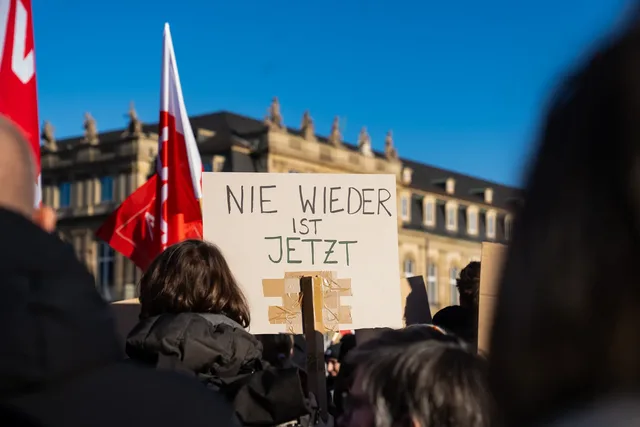
* The role of strategic alliances in strengthening far-right voting blocs. * The transition from single-issue Euroscepticism to broader political influence. * How localized council seats can signal a larger national political shift. * The impact of historical party mergers on modern electoral outcomes.
How do political alliances influence the German far right rise?
At midnight in the dimly lit office, he traces a finger along the map to visualize the German far right rise through new coalitions.
A strategist sits in a quiet room, marking lines on a map to show how different factions might merge to increase their collective voting power. The German far right rise is frequently fueled by the way smaller, ideologically aligned groups combine their resources to overcome electoral thresholds.
Historically, political entities have used alliances to consolidate power before major election cycles. For example, prior to the 1999 elections, one party joined the National Union alliance alongside Herut – The National Movement and Tkuma.
Such maneuvers allow fragmented groups to present a unified front to the electorate.
These shifts demonstrate that political momentum is often built through calculated partnerships rather than isolated growth.
In this sequence, the second step is the longest. 1. Formation of informal coalitions. 2. Consolidation of voter bases through strategic partnerships. 3. Integration into broader parliamentary maneuvers.
What explains the German political shift through single-issue origins?
A researcher flips through old archives, tracing the lineage of a party that began with a single, focused grievance. A German political shift can be traced back to movements that start with one specific goal, such as opposing supranational integration.
The UK Independence Party (UKIP) provides a historical template for this phenomenon. UKIP originated as the Anti-Federalist League, a single-issue Eurosceptic party established in London by Alan Sked in 1991. This movement eventually grew beyond its initial scope to impact national discourse.
According to Wikipedia, UKIP began as the Anti-Federalist League, a Eurosceptic political party established in 1991 by the historian Alan Sked. This transition from a niche interest to a major political player illustrates how specific grievances can drive broader institutional change.
Can weekly far right focus be driven by localized successes?
A local official stands in a town hall, looking at a list of council seats that shows a sudden surge in opposition strength. A weekly far right focus often intensifies when these movements prove they can win tangible, local positions of power.

In some instances, these parties reach a zenith of influence by capturing municipal and regional roles. At its peak in the late 2000s, one party had 54 local council seats, one seat in the London Assembly, and two seats in the European Parliament.
Furthermore, these groups have served as the official opposition in specific areas, such as the Barking and Dagenham London Borough Council. These localized victories serve as proof of concept, signaling to the wider electorate that the movement is a viable governing alternative.
How does political polarization now affect party stability?
An analyst watches a television screen, noting how heated debates divide the public into increasingly distinct camps. Political polarization now creates a vacuum that specialized parties are quick to fill, often by capitalizing on the perceived failures of mainstream institutions.
The stability of these organizations can vary wildly depending on their institutional roots. The study "The Rise and Fall of Japan's LDP: Political Party Organizations as Historical Institutions" examines how party structures evolve over time.
When mainstream parties fail to address specific cultural or economic anxieties, polarized voters gravitate toward the fringes. This movement is not merely a temporary trend but a structural shift in how citizens engage with the state.
What are the threats to German security from these shifts?
A security expert reviews intelligence reports, noting the rising tension in public discourse and the potential for civil unrest. Threats to German security can manifest through the social friction caused by rapid political realignment and the erosion of traditional consensus.
As movements gain more seats, the ability of the government to form stable coalitions becomes more difficult. This friction often leads to legislative gridlock, which can further alienate the voting public.
The rise of these groups often coincides with increased social fragmentation. When political discourse moves toward the extremes, the stability of democratic institutions is tested by the sheer intensity of the opposition.
How do far right parties gain momentum through competition in German politics?
A campaigner walks through a crowded market, handing out flyers that promise a return to traditional values. Competition in German politics is intensifying as parties vie for the attention of voters who feel neglected by the current establishment.

To understand how far right parties gain momentum, one must look at the following steps:
- Identify a specific, unaddressed grievance within the current electorate. 2. Form strategic alliances with existing minor parties to maximize seat counts. 3. Target local council elections to build a track record of administrative presence.
After completing these steps, a final check of the party's branding is necessary to ensure it appeals to a broader demographic beyond its original niche. I have seen how these incremental gains in local councils eventually translate into much larger national shifts.
The effectiveness of this strategy is limited to environments where electoral systems allow for the representation of smaller, fragmented groups.
The same subject is also called Extreme right party news.
How did UKIP start?
UKIP originated as the Anti-Federalist League, a single-issue Eurosceptic party established in London by Alan Sked in 1991.
What was the peak of the party's influence in the UK?
At its peak in the late 2000s, the party had 54 local council seats, one seat in the London Assembly, two seats in the European Parliament, and were the official opposition in the Barking and Dagenham London Borough Council.
The analysis of far-right political movements shows that their ascent is rarely accidental, relying instead on a combination of single-issue origins, strategic alliances, and localized electoral victories.
While these movements can disrupt established political orders, their long-term impact depends on their ability to transition from niche interests to broad institutional players.
Comments 0