Far right party election surge: How to guide voters
"The political landscape is shifting beneath our feet, as old allegiances dissolve into new, uncertain patterns of voting power."
* The AfD is the current frontrunner in the PolitPro Poll Trend with 28% support. * Governing parties face a loss of majority as they currently hold 39.5% of seats. * The CDU/CSU follows the frontrunner with 22% support. * A 5% electoral threshold is required for seat allocation in the Bundestag.
Why is the German far right vote trend accelerating?
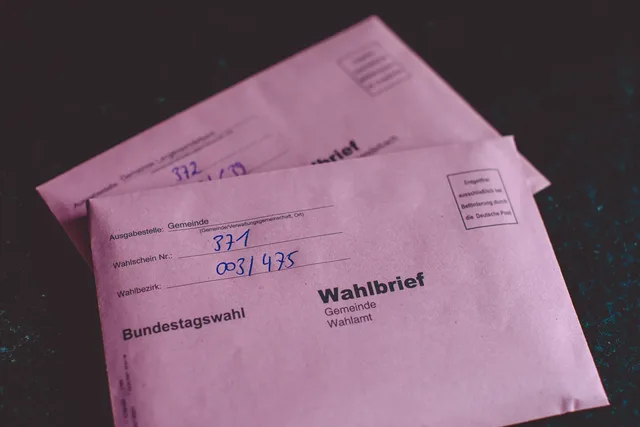
A voter marks a ballot in a quiet polling station, feeling the weight of a changing nation. This German far right vote trend reflects a growing momentum for alternative political voices.
The shift is evident when comparing recent momentum. While the AfD rises, the CDU/CSU has experienced a 0.6 decline over the past 30 days. This movement indicates that voters are moving away from established center-right options toward more radical platforms.
The current political atmosphere is defined by this rapid realignment of public interest.
How does the extreme party election shift affect the majority?
At midnight, a legislator stares at the seating chart in the dim office, feeling the cold chill of a lost majority right in their bones.
A legislator looks at a seating chart, realizing the math no longer favors the status quo. This extreme party election shift threatens the stability of the current government.
The incumbent coalition in Germany currently secures only 39.5% of the seats, which would result in the loss of its parliamentary majority.
The impact of this shift is visible in the projected seat counts. For a majority in the Bundestag, 316 seats are required. Under current trends, the AfD is projected to reach 203 seats, while the CDU/CSU would hold 159. This realignment creates a complex landscape for future coalition building.
I watched the recent polling data closely and realized how quickly the traditional majority is eroding.
What defines the current right-wing political wave? A strategist pores over a spreadsheet, noting the widening gaps between parties. The right wing political wave is clearly visible in the distribution of voting intentions. The AfD leads with 28%, followed by the CDU/CSU at 22%.
Other parties occupy smaller segments of the electorate, including the Grüne at 13.9%, the SPD at 12.4%, and Die Linke at 10.8%. Smaller groups like the FDP at 4% and BSW at 3.3% round out the field. The data shows a clear concentration of support moving toward the edges of the political spectrum.

This wave is reshaping the competitive nature of the upcoming 2029 General Election.
How do seat requirements drive far-right political change? A candidate stands before a crowd, knowing the threshold for entry is high. Analyzing far right political change requires understanding the strict rules of the Bundestag. To qualify for seat allocation, a party must meet specific legal criteria.
- Secure at least 5% of the valid second votes nationwide. 2. Maintain enough support to surpass the electoral threshold. 3. Alternatively, utilize the basic mandate clause by securing at least three direct mandates.
If a party meets the basic mandate clause, it gains entry to the Bundestag reflecting its second vote share, even if it falls short of the 5% threshold. I find it fascinating how these specific rules can determine the survival of smaller political movements.
This mechanism ensures that even during a surge, the parliamentary structure remains governed by established legal hurdles.
Comparing party support levels
A researcher places two columns of data side by side to see the contrast. A comparison of the leading parties shows how the electorate is splitting its loyalty.
| Party | Poll Percentage |
|---|---|
| AfD | 28% |
| CDU/CSU | 22% |
The gap between these two primary forces highlights the intensity of the current political transition.
What are the limitations of these polling trends?
An analyst stares at a screen, noting that data is a snapshot, not a certainty. The limitations of these trends are tied to the fact that the next General Election in Germany is not expected until 2029.
Because the election is years away, current momentum may fluctuate significantly before voters return to the polls.

- The far right party election surge in Germany is driven by a significant shift in voter intent, with the AfD currently leading polls.
- This movement is characterized by a gain of 2.4 points for the AfD over the past 90 days, while traditional major parties like the CDU/CSU have seen a 0.6 decline over the last 30 days.
- This trend suggests a major disruption to the current governing coalition, which currently secures only 39.5% of the seats and would lose its parliamentary majority under these trends.
Far right party election surge
The subject here is Far right party election surge.
The same subject is also called Social debate election flow.
This part also covers Why is this election controversial?.
This part also covers Shifting German party competition.
What is the current lead in German polls?
The frontrunner in the current PolitPro Poll Trend for the German election is AfD with 28%.
How many seats are needed for a majority?
A majority in the Bundestag requires 316 seats.
The current political shift in Germany is defined by the AfD's 2.4 point gain over 90 days and the shrinking majority of the incumbent coalition. While the AfD leads with 28%, the governing parties face a loss of their majority as they currently hold only 39.5% of the seats.
How does the political landscape compare across different parties?
- The AfD maintains a leading position in the political landscape with 28% support. 2. The CDU/CSU trails the AfD, securing 22% of the voter support. 3. The Grüne register 13.9% of the electorate, showing a distinct segment of the political landscape. 4. The SPD holds 12.4% of the support, illustrating another division within the political landscape.
The comparison between the AfD and the CDU/CSU reveals a substantial difference in momentum within the political landscape. The decline seen by the CDU/CSU over the last 30 days contrasts with the AfD's recent gains, signaling a dynamic political landscape.
This contrast is a key feature of the current political landscape.
What conditions must a party meet to enter the Bundestag?
The Bundestag entry conditions establish a clear procedural barrier for political movements. A party must either achieve a substantial national vote share or secure direct legislative representation. The 5% electoral threshold serves as a primary condition for seat allocation.
- A party must gather at least 5% of the valid second votes nationwide to qualify. 2. If that threshold is not met, a party can still enter if it wins three or more direct mandates. 3. Meeting the basic mandate clause allows a party to gain entry based on its second vote share, despite falling below the 5% condition.
These conditions dictate how the political landscape translates into legislative power, ensuring that both large and smaller political forces have a pathway into the Bundestag, subject to specific legal hurdles.
Wikipedia: Far-right politics (full) Based on the retained excerpt mentioning The European Alliance: The European Alliance for Freedom would also reorganize into Identity and Democracy for the 2019 European Parliament election.
Comments 0