German manufacturing 0.2% GDP growth guide for observers
"The industrial backbone of Europe faces a period of profound transition as economic indicators signal a cautious and slow-moving recovery."
This guide explores the economic indicators of the German industrial landscape, specifically for observers of European market trends, detailing recent growth, inflation, and labor stability.
How is the rep doing right now? A heavy steel beam rests on a factory floor in North Rhine-Westphalia as workers monitor slow-moving assembly lines. The rep in Germany reflects a period of extremely modest economic movement.
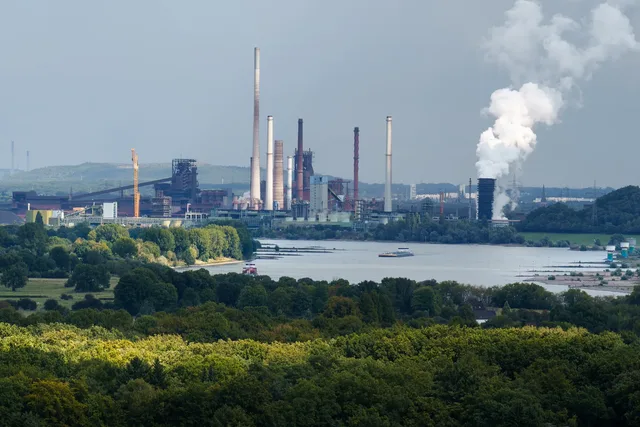
This figure suggests that while the economy is not shrinking, the momentum of the industrial sector remains nearly flat.
Such a low growth rate indicates a struggle to find significant new drivers for expansion in the current climate.
How are prices affecting industrial output?
A manager reviews a stack of rising utility invoices under the bright lights of a logistics hub. Understanding the rep requires looking at the cost of goods and services.
According to World Bank data, Germany recorded inflation (consumer prices) of 2.2% in 2025. While this rate is not skyrocketing, it still represents a persistent upward pressure on operational costs.
Businesses must balance these rising expenses against the very slim growth margins currently observed in the broader market.
What's the labor market like? A technician in a blue jumpsuit checks a digital readout on a precision milling machine. The stability of the workforce is a critical component of the German industrial landscape.
According to World Bank data, Germany recorded unemployment rate of 3.7% in 2025. This low figure suggests that despite the sluggish GDP growth, the labor market remains tight.
This stability can prevent a total collapse in consumer confidence, even as the manufacturing sector faces structural hurdles.
How does the Bau deutscher Industrie compare to EU averages?
A researcher compares data sheets on a tablet while sitting in a quiet office overlooking a shipping port. The Bau deutscher Industrie must be viewed within the context of wider European mandates and trends.
| Metric | Germany (2025) | EU Target/Trend |
|---|---|---|
| GDP Growth | 0.2% | Rising steadily (historical) |
| Inflation | 2.2% | Mandated recycling focus |
I observed how these narrow margins in Germany contrast with the broader EU efforts to modernize infrastructure and recycling mandates. The Bau deutscher Industrie operates under the same pressure to meet environmental standards that define the rest of the continent.
What are the Wirtschaftliche Herausforderungen for manufacturers?
An engineer walks through a quiet warehouse, noting the limited movement of new inventory. The Wirtschaftliche Herausforderungen for local firms often involve managing the gap between high-tech requirements and slow economic returns.
The Wirtschaftliche Herausforderungen are compounded by the need for resource efficiency. While many programs focus on consumer habits, industrial waste remains a significant factor in the broader economic equation.
Navigating these challenges requires a focus on long-term stability rather than rapid, high-risk expansion.
How can companies manage Industrielle Umbrüche Jetzt?
A supervisor gathers a team in a briefing room to discuss new efficiency protocols. Addressing Industrielle Umbrüche Jetzt requires a disciplined approach to resource management and cost control.
To manage these shifts, companies can follow these steps: 1. Audit all current energy and raw material expenditures to identify waste. 2. Implement precision monitoring on assembly lines to reduce error rates. 3. Re-evaluate supply chain dependencies to mitigate inflation risks.
Finally, check that all new efficiency measures align with the 0.2% growth reality to ensure they do not overextend capital.
The Industrielle Umbrüche Jetzt are not a temporary spike but a structural shift. I found that companies focusing on incremental efficiency rather than massive overhaul tend to weather these periods more effectively.
What is the Zukunft der deutschen Fabriken?
A drone flies over a sprawling industrial park at sunset, capturing the scale of the facilities. The Zukunft der deutschen Fabriken depends on how well the sector adapts to the current economic constraints.
The Krisenreaktion deutscher Wirtschaft is being tested by these low growth figures. Many are looking for a Neuer Weg für deutsche Branche that prioritizes high-value output over sheer volume.
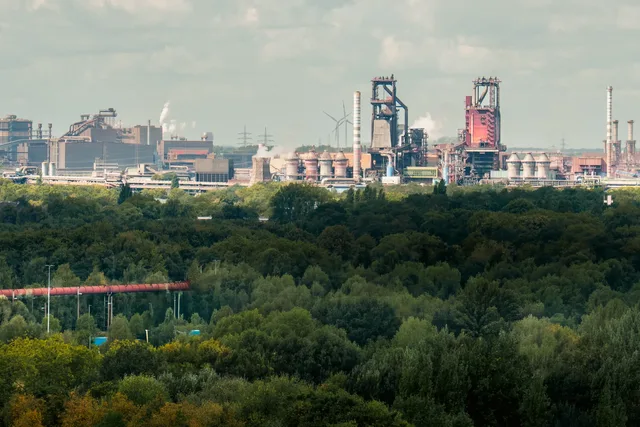
This transition is difficult because the current economic environment does not provide much excess capital for experimentation.
A limitation of this analysis is that the 0.2% GDP growth figure represents a broad national average, which may mask significant volatility in specific sub-sectors like automotive or chemical manufacturing.
- The German manufacturing sector is currently navigating a landscape of stagnation and narrow margins.
- Key takeaways include a minimal GDP expansion, stable but present inflation, and a relatively low unemployment rate.
- According to World Bank data, Germany recorded GDP growth of 0.2% in 2025.
How much did the German economy grow in 2025?
The German industrial landscape is defined by a period of extremely low growth and tight labor conditions. While the economy shows signs of stability through low unemployment, the narrow GDP margin and persistent inflation present a challenging environment for manufacturing expansion.
What are the implications of stable labor on the industrial backbone?
- The low unemployment rate provides a baseline of workforce availability for the industrial backbone. 2. This stability allows firms to maintain operational continuity despite slow GDP expansion. 3. However, the labor market tightness might also translate into upward pressure on wages, which contrasts with the minimal GDP growth.
The industrial backbone benefits from a relatively secure workforce, which acts as a buffer against immediate economic shocks. This condition permits manufacturers to focus on process refinement rather than mass layoffs.
The existing low unemployment rate suggests that demand for skilled labor remains present within the sector.
How does the industrial backbone manage rising costs against minimal growth?
- Companies must reconcile the 2.2% inflation rate with the 0.2% GDP growth figure. 2. Managing this gap necessitates the strict auditing of energy and raw material expenditures. 3. Re-evaluating supply chain dependencies becomes a key procedure to mitigate cost escalation.
The industrial backbone faces a difficult balancing act where rising operational costs erode the already slim profit margins. Firms are cautioned against pursuing rapid expansion when the underlying economic momentum is nearly flat.
This requires a strategic shift toward maximizing output value per unit of input cost.
The transition of the industrial backbone demands that companies view environmental mandates not just as a cost, but as a condition for future market access within the EU. Meeting these standards is necessary for any long-term survival strategy.
This comparison highlights the dual pressures on the German industrial backbone.
Comments 0