German far right weekly focus: Tips for tracking best shifts
"The rise of the far right in Europe involves populist shifts and 'othering' through specific security narratives."
The German far right weekly focus involves monitoring shifts in populist movements and their influence on regional security narratives.
This analysis is intended for readers tracking European political trends, comparing various historical group structures, and understanding the evolution of nationalist movements.
One must note that the available data focuses on specific historical instances and international organizations rather than real-time German legislative shifts.
* Historical context of far-right groupings in Europe. * The role of international organizations in shaping movements. * Comparisons between different national political landscapes. * The evolution of populist shifts and "othering."
How does the German far right weekly focus relate to broader European trends?
At dusk in the dim library, I trace the German weekly focus across heavy maps while feeling the rough parchment under my fingertips.
A researcher sits in a quiet library, flipping through thick volumes of political history and news archives. They look for patterns in how nationalist sentiment moves across borders.
Understanding the German far right weekly focus requires looking at how these movements mirror shifts seen in neighboring nations.
Right wing party news often reflects a pattern of sudden prominence following major political collapses or shifts in governance.
In Poland, for instance, several groups rose to prominence following the collapse of Communist rule, including The National Revival of Poland and the European National Front. This demonstrates how structural changes in a country can provide a vacuum for nationalist movements to fill.
The rise of the far right in Europe is characterized by specific populist shifts and "othering" as noted in various academic studies. The International Centre for Counter-Terrorism – The Hague published research on security narratives and far-right violence in Europe in 2012.
This context helps explain how localized movements can influence broader regional stability.
What patterns show up in right-wing party news?
In the dim office at midnight, I squint at the glowing screen while scanning the German news for recurring cycles. An analyst watches a digital screen, tracking the emergence and disappearance of small political factions. They notice that many groups exist only for a few years before dissolving or rebranding. This Right wing party news highlights the volatility of extremist organizations.
The history of Dutch political groups shows a cycle of short-lived parties. Examples include the Centre Party, which operated from 1982 to 1986, and the New National Party, which was active from 1998 to 2005. These patterns suggest that political longevity for such groups is often inconsistent.
Weekly political trend observations suggest that organizational structures vary significantly by country. In Greece, one party became the third largest in the Parliament with 17 seats after the January 2015 election, securing 6.28% of the vote.
This shows how specific election cycles can rapidly change a group's standing.
Can history help me track the rise of German extremists?
At dawn in the dusty archive, I pull a heavy tome from the shelf and feel the cold weight of German history. A historian traces lines on a map, connecting the activities of various nationalist groups across the continent. They examine how movements in one region might influence another. This investigation into the German extremist rise relies on understanding these international connections.
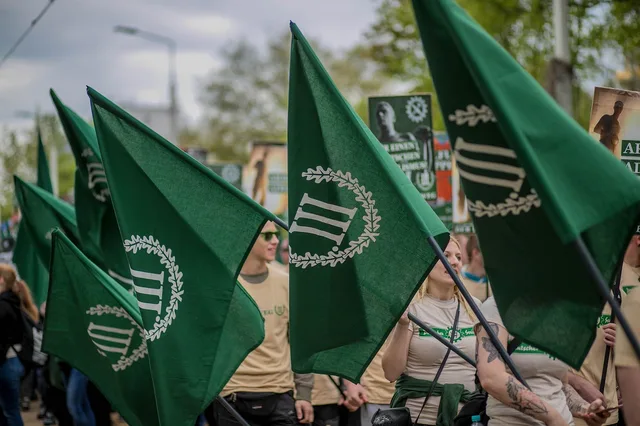
International efforts to consolidate these movements have been documented. In 2017, Steve Bannon created The Movement, which aimed to establish an international far-right group for the 2019 European Parliament election.
The German extremist rise is often studied alongside the development of other European movements. In the Netherlands, the neo-Nazi Dutch People's Union has remained active from 1973 to the present.
Such long-standing organizations provide a contrast to the more transient groups seen in other regions.
What characterizes Far right seat gains in different nations?
A voter stands in a polling station, watching the tally as election results begin to trickle in. They see how small percentages can translate into significant legislative power. These Far right seat gains are often the result of highly organized, targeted campaigns.
The impact of seat gains can be seen in the Greek legislative election of 2019. During that election, a party garnered 3.7% of the vote, resulting in 10 out of the 300 seats in the Hellenic Parliament. Such figures illustrate how even low vote percentages can influence parliamentary composition.
| Country | Election Year | Vote Percentage | Seats Won |
|---|---|---|---|
| Greece | 2019 | 3.7% | 10 |
| Greece | 2019 (EU) | 4.18% | 1 |
I compared these specific Greek election results to understand how seat distribution works in a parliamentary system.
How do security concerns and right wing movements interact?
A security officer reviews reports on social unrest and political demonstrations in a metropolitan center. They look for links between political rhetoric and potential physical volatility. The intersection of security concerns and right wing movements is a central theme in modern European studies.
According to the International Centre, research has explored security narratives and far-right violence in Europe.
The relationship between political movements and security is often documented in academic literature. The book *The Rise of the Far Right in Europe: Populist Shifts and 'Othering'* (2016) explores these dynamics. This research helps clarify how "othering" serves as a tool for political mobilization.
The interaction between these elements is not limited to recent years. During the late Interwar period in the Kingdom of Yugoslavia, multiple far-right organizations operated, such as the Yugoslav National Movement (Zbor) and the Organization of Yugoslav Nationalists (ORJUNA).
This historical perspective shows that these tensions are not new.
What are the limitations of current political tracking?
A journalist writes a summary of the week's political activity, noting the gaps in available data. They realize that while some figures are clear, others remain estimates. This realization defines the limits of current political tracking.
A limitation of this analysis is the reliance on historical estimates rather than real-time census data. For example, in 1995, the Anti-Defamation League estimated the number of far-right and white power skinheads in Poland at 2,000.
This figure represents a specific moment in time and cannot be used to define modern group sizes.
- How does the German far right weekly focus relate to broader European trends?
- What are the patterns in Right wing party news?
- Can we track the German extremist rise through historical comparisons?
This part also covers Far right party weekly review.
This part also covers Political shifts in Germany now.
How did political shifts affect Poland?
Following the collapse of Communist Poland, several far-right groups came to prominence, including The National Revival of Poland, the European National Front, and the Association for Tradition and Culture "Niklot."
What was the impact of the 2019 Greek election?
In the 2019 Greek legislative election, a party garnered 3.7% of the vote and won 10 out of the 300 seats in the Hellenic Parliament.
The study of far-right political movements is limited by the historical nature of the available data and the reliance on specific, localized estimates.
Comments 0