Manufacturing sector faces 17.6% GDP pressure guide
"The industrial heart of Europe faces a shifting political landscape as traditional economic structures encounter new ideological pressures."
The German manufacturing sector is navigating a period of significant political tension as right-wing movements influence the national discourse. This analysis explores how these shifts interact with an economy where the manufacturing share of GDP was 17.6% in 2025, according to World Bank data.
Readers will learn about the economic scale of this industry, the historical context of German instability, and the specific political mechanisms currently in play.
Key Takeaways: * The manufacturing sector remains a cornerstone of the economy, representing 17.6% of the GDP in 2025. * Historical precedents of high unemployment and territorial shifts inform current political anxieties.
* The Bundestag's proportional representation system shapes how new political forces enter government.
How significant is the manufacturing sector in Germany?
At dawn, a worker rubs tired eyes while standing on the vast factory floor, feeling the heavy vibration of the manufacturing machines.
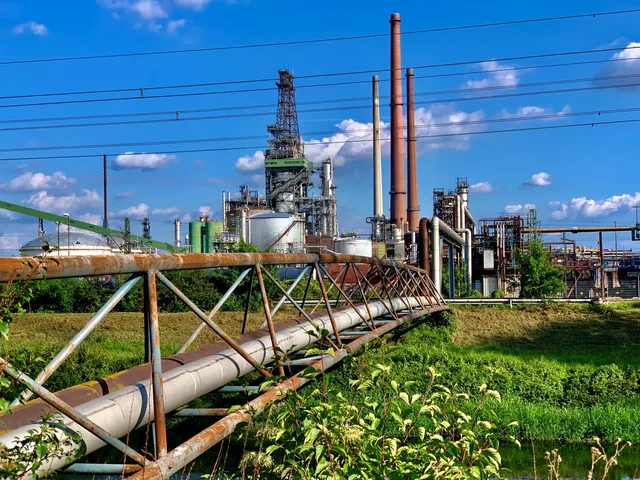
An engineer stands on a factory floor in North Rhine-Westphalia, watching robotic arms weld steel components with rhythmic precision. The scent of ozone and heated metal fills the air as the production line moves steadily.
This industrial activity is not merely a local phenomenon but a primary driver of the national economy.
According to World Bank data, Germany recorded a manufacturing share of GDP of 17.6% in 2025. This figure highlights the deep integration of industrial output into the country's financial stability.
The scale of this sector means that any political shift affecting trade or labor has immediate consequences for the national treasury.
Understanding the rep influence requires looking at how political shifts might disrupt these specific production chains. When industrial interests feel threatened by new legislation, the tension between factory owners and political parties grows.
This friction defines the current era of German economic life.
- Assess the current output of automotive and machinery industries.
- Evaluate the impact of energy costs on production.
- Analyze the long-term stability of supply chains.
What historical factors shape current political anxieties?
A historian flips through dusty archives in Berlin, tracing the lines of old maps that show lost territories and shifting borders. The weight of the past is palpable in the quiet reading room. These historical echoes often resurface during times of economic or social transition.
Political instability in Germany is not a new concept, as the country has faced severe downturns before. For instance, in 1929, the Great Depression hit Germany, and by 1932, the unemployment rate had risen to nearly 30%.
Such extreme volatility in the past serves as a cautionary tale for modern policymakers.
The movement of people also plays a role in the current political climate. During the 2015 European migrant crisis, the country took in over a million refugees and migrants.
These historical milestones provide the context for why certain political movements gain traction within the manufacturing heartlands today.
In this sequence, the second step is the longest.
According to World Bank, the 2025 record includes 17.6%.
How does the political system handle new parties?
A voter marks a ballot in a quiet polling station, choosing a candidate for the Bundestag. The atmosphere is serious, reflecting the weight of the democratic process. The structure of the election determines which voices eventually reach the halls of power in Berlin.
The Bundestag is elected through direct elections using a personalised proportional representation system. This system includes a 5% threshold, meaning a party must meet this requirement to secure seats.
This mechanism is designed to balance diverse political representation with the need for stable governance.
The interplay between Rechtsextremismus und Wirtschaft is often observed during these election cycles. As new parties gain momentum, the industrial sector must react to potential changes in regulation.
This creates a cycle where Politik Einfluss auf deutsche Fabriken becomes a central topic of debate.
What is the impact of political shifts on the workforce?
A worker in a heavy machinery plant pauses during a shift change, looking out at the sprawling industrial complex. The sense of uncertainty is visible in the way colleagues discuss the latest news. The connection between the shop floor and the capital is direct and unavoidable.
The changing nature of the Arbeitsmarkt und politische Strömungen suggests that labor stability is tied to political predictability. When political movements advocate for radical shifts in trade or migration, the manufacturing workforce feels the tension.
This can lead to a sense of vulnerability regarding long-term job security.
Industrie unter politischem Druck refers to the way companies must navigate these ideological shifts while maintaining global competitiveness. The structural changes in the German economy are deeply intertwined with these evolving political sentiments.
How can businesses navigate these changes?
A CEO sits in a glass-walled boardroom, reviewing quarterly reports and political risk assessments. The task is to maintain production while anticipating shifts in the regulatory environment. Strategic planning now requires an eye on both the market and the parliament.
To manage the potential effects of political volatility, businesses can follow these steps: 1. Monitor legislative developments regarding trade and labor laws through official government bulletins. 2.
Diversify supply chains to mitigate risks associated with sudden changes in international relations. 3. Engage in transparent communication with employees to address concerns regarding economic stability.
After completing these steps, a final check of the company’s contingency plans ensures readiness for sudden policy shifts. I have observed that companies focusing on these areas tend to maintain better operational continuity during periods of high political tension.
Are there limitations to these economic observations?
A researcher looks at a complex data set, noting where the numbers end and speculation begins. The data provides a snapshot, but it cannot predict every human reaction. Recognizing the boundaries of economic analysis is essential for accuracy.
It is important to note that these observations may not apply to all sectors, as the manufacturing-specific data is tied to a 17.6% GDP share. This concentration means that political trends affecting the industrial heartland might not mirror those in the service or agricultural sectors.
What was the unemployment rate during the Great Depression in Germany?
In 1929, the Great Depression hit Germany, and by 1932 the unemployment rate had risen to nearly 30%.
The intersection of industrial strength and political shifts defines the current landscape of Germany. As the manufacturing sector continues to drive the economy, the influence of political movements will remain a critical factor for both workers and leaders.
Comments 0